



 English
 Russia
 France
 Spain
 Arab

A compressor quote lands on your desk. Two columns, two numbers, one obvious winner. The cheaper machine is 18% below the other one, same flow rating, same pressure. Procurement is happy. Six years later the same decision has cost the plant more than the difference between the two quotes — several times over.
This is not an argument for buying the expensive machine. It is an argument for pricing the machine you are actually buying, which is ten years of electricity, consumables, repairs and downtime risk wrapped in a steel cabinet. The purchase price is a down payment.
An air compressor total cost of ownership calculation is how you see the rest of it before you sign. It takes about an hour with the right inputs, and it changes the ranking of quotes more often than buyers expect. Sometimes it confirms the cheap machine. The point is knowing which case you are in.
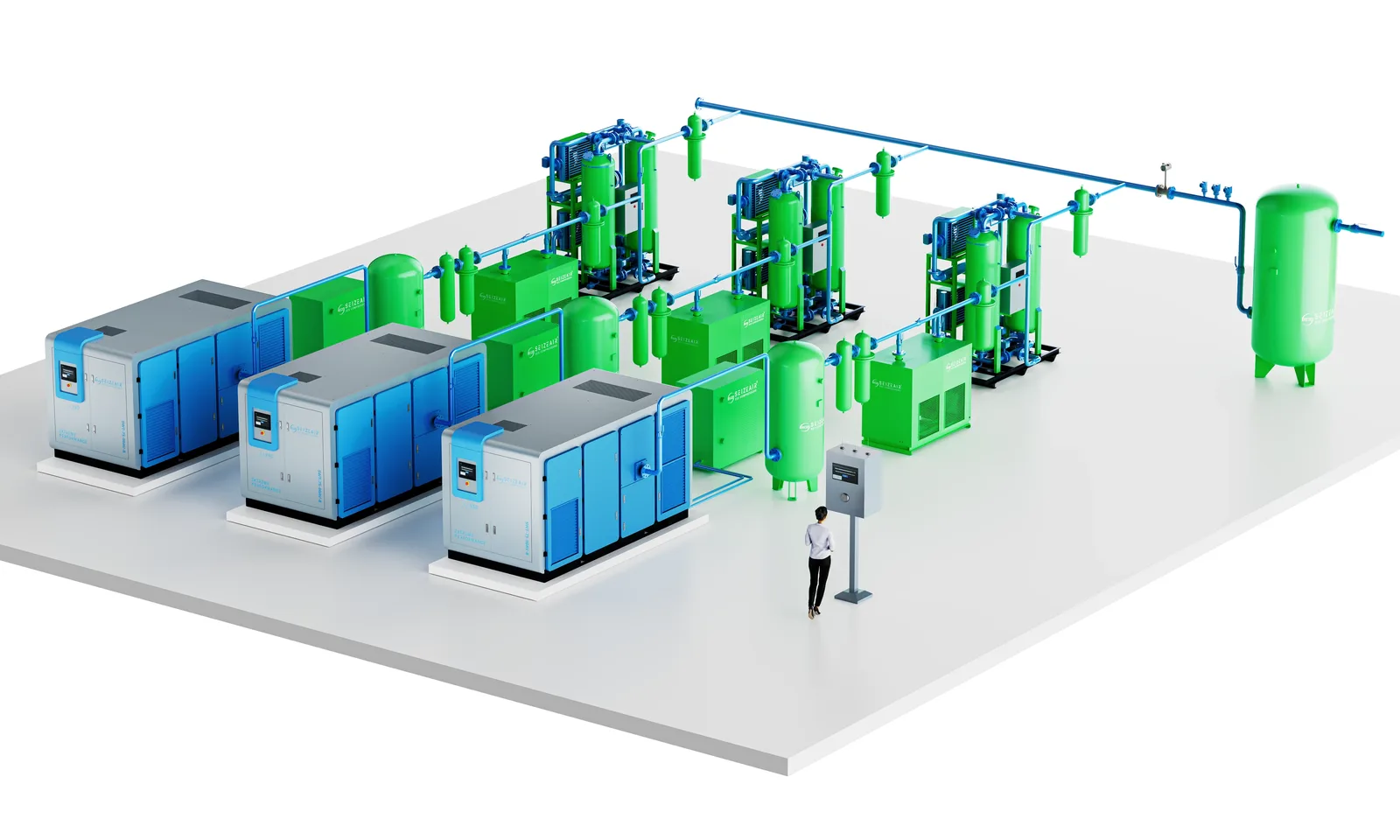
What an air compressor total cost of ownership calculation includes
Most people who say “total cost” mean “purchase price plus electricity”. That is better than purchase price alone, but it still misses two of the four buckets that decide the outcome.
Capital cost
Not just the machine. Everything required to get compressed air to the point of use at the required quality: the compressor itself, the dryer and filtration if quality demands it, the receiver, the pipework and installation labour, the electrical work from the distribution board to the isolator, the foundation or plinth, and the room preparation — ventilation, drainage, access for service.
Quotes routinely exclude half of this. A compressor room that needs ducting, a new cable run and a condensate drain can add a meaningful fraction of the machine price, and none of it shows up when you compare two equipment numbers side by side.
Energy cost
The compressor’s share of the electricity bill for as long as it runs. This is the dominant term over ten years for most industrial duty cycles, and it is the one buyers are least equipped to estimate, because it depends on how the machine behaves at part load rather than at full load — and part load is where most machines spend most of their life.
Maintenance cost
Two different animals that need separate lines in your sheet.
Planned maintenance is predictable: oil, oil filter, air filter, separator element, coolant analysis, belt or coupling checks, and the labour to do it. Most manufacturers publish these intervals, and you can price them before you buy. Ask for the service schedule and the consumable prices in writing.
Unplanned maintenance is the one that breaks budgets: a failed bearing, a seized airend, a blocked cooler that cooks the oil, a control board that fails during a weekend run. You cannot predict it, but you can bound it — by checking whether the machine has local parts stock, what the warranty actually covers, and how long a critical spare takes to arrive.
Downtime and risk cost
If compressed air stops and the line stops with it, that cost dwarfs everything else on the page. It is also the hardest to quantify honestly, which is why many TCO sheets leave it out entirely. Leaving it out is a decision, not a neutral act: it systematically favours the machine with no redundancy and no local support.
You do not need a precise number. You need an honest range: hours of production at risk per year, margin per hour, probability of a stoppage that lasts more than a shift. Even a rough figure makes the trade-off visible.
Residual value and replacement timing
A machine that runs 15 years spreads its capital cost over 15 years. A machine that is economically dead at 9 spreads it over 9. Residual value is usually a small term for compressors and often rounds to zero in practice, but replacement timing is not small — it is the denominator of the whole calculation.
Where the money actually goes over ten years
Across industrial compressed air audits, the same rough split keeps appearing: energy is the largest single term by a wide margin, followed by capital, with maintenance a distant third. A commonly cited rule of thumb places energy somewhere around 70–80% of ten-year cost, capital around 10–15%, and maintenance around 5–10%.
Treat those numbers as a starting hypothesis, not a fact about your plant. Two variables move them hard:
- Electricity tariff. At a low tariff the capital share rises and efficiency matters less. At a high tariff the same machine behaves like a different machine financially.
- Annual running hours and load factor. A compressor running 6,000 hours a year at 70% average load lives in a completely different cost world from one running 1,500 hours at 30%. The second machine’s energy term is small enough that purchase price legitimately dominates.
This is why the honest answer to “how much does compressed air cost” is always a calculation with your inputs, never a percentage copied from an article. Including this one.
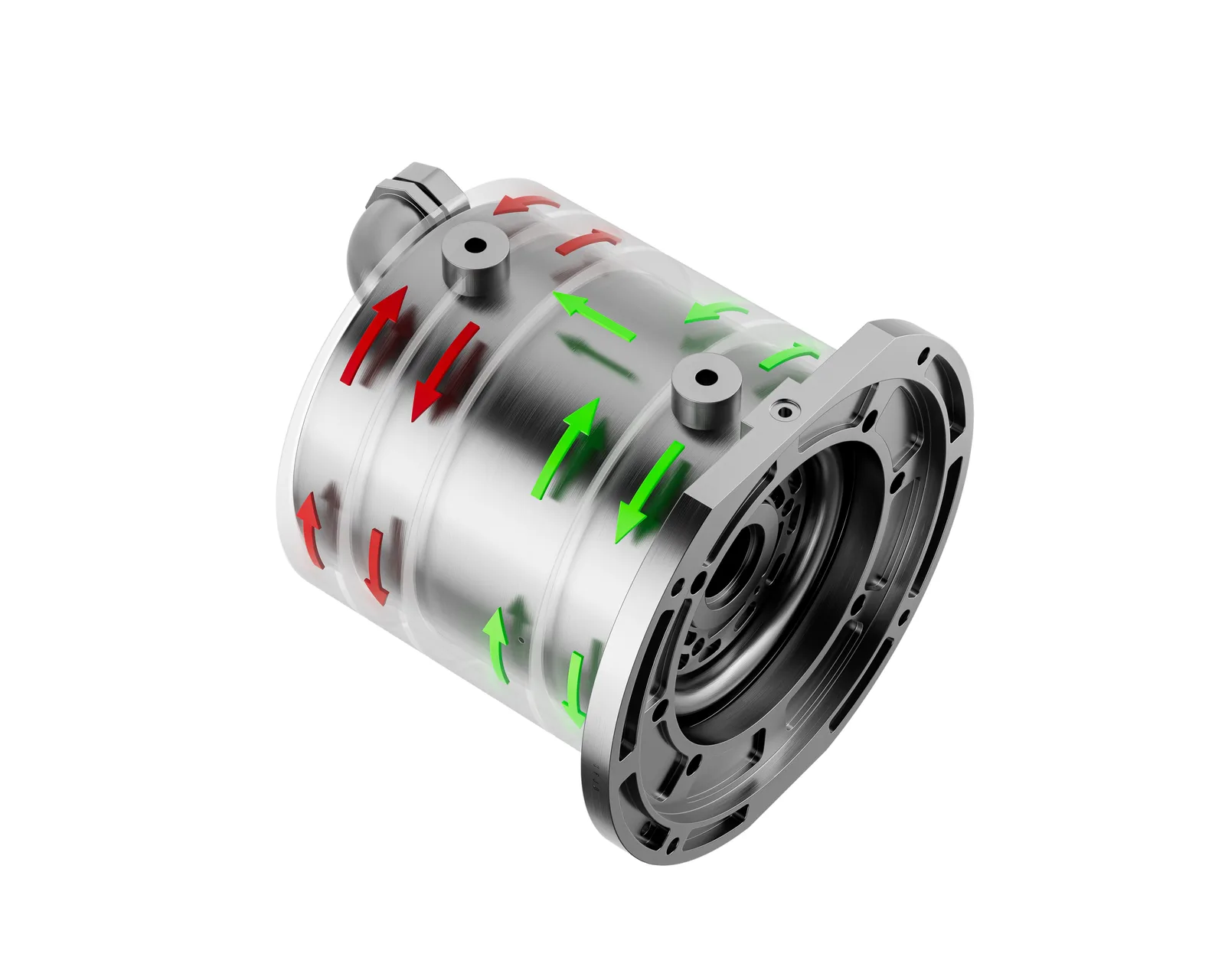
Energy: the calculation that decides the outcome
You need three inputs and one multiplication.
Step 1 — annual running hours
Not “the plant runs 24/5”. Hours when the compressor is actually pressurised and delivering. If the line depressurises overnight and at weekends, count only production hours. If a compressor runs unloaded but pressurised on standby, it is still consuming.
Step 2 — average load factor
The share of installed capacity the machine actually delivers on average. A 75 kW unit that averages 45 kW of air demand is at 60% load. Most single compressors in a plant without sequencing sit between 40% and 70%. This number is the single biggest source of error in TCO comparisons, and most buyers have never measured it.
If you cannot measure it, estimate it conservatively and then run the calculation twice — once at your estimate and once 15 points lower. If the ranking of the two quotes flips between those runs, you need the measurement before you decide.
Step 3 — specific power at that load
Specific power is input kW per unit of delivered air, typically kW per 100 cfm or kW per m³/min at a stated pressure. It is the only efficiency figure worth comparing across quotes, because it is measured at the output flange and includes motor, drive and compression losses.
Ask for specific power at full load and at part load. A machine with excellent full-load specific power and poor part-load behaviour will lose to a machine with slightly worse peak efficiency in almost any real plant, because real plants are mostly part load. This is also where on-site energy saving measurement earns its keep — a few days of logging current and flow gives you a load profile instead of a guess.
Step 4 — the annual kWh
Annual energy ≈ rated input kW × annual hours × load factor ÷ efficiency at that load. In practice your supplier can give you a consumption curve; if they cannot, that itself is information about how seriously they expect you to take efficiency.
One trap: unloaded running. A fixed-speed screw that idles at 30–40% of full-load power while producing no air can add a large block of annual kWh that never appears in a full-load comparison. Ask what the machine draws when it is unloaded, and how long it idles before it shuts down.
Another trap: pressure. Every 1 bar of unnecessary discharge pressure costs roughly 6–8% of the energy input, and plants routinely run 1–2 bar higher than their tools need because the number was set years ago and nobody revisited it. If the same pressure reduction applies to both quotes, it does not change the ranking — but if one proposal includes a control strategy that holds a tighter pressure band, it does. Pressure loss across the distribution system is a separate topic with its own fixes; the pressure drop causes and measurement guide covers that ground.
Capital costs that never appear in the quote
When two quotes differ by a few thousand, the tie is usually broken by what each one includes — not by the machine. Before you compare prices, put both quotes on the same scope. These are the items most often missing:
- Air treatment. If you need dry air, the dryer, drain and filtration are part of the decision. A cheaper compressor that needs a more expensive dryer to meet the same air quality is not cheaper. The required class is a quality question, and it is worth settling before you price anything — the compressed air quality standards overview explains how classes are specified.
- Receiver volume. Undersized storage forces the compressor to cycle and defeats part-load control. The receiver is cheap insurance for the control strategy you just paid for.
- Electrical work. Cable sizing, isolator, protection, and in some plants a transformer or a soft-starter. Get it quoted by someone who has seen the board.
- Room preparation. Ducting for cooling air, make-up air in winter, floor drainage for condensate, lifting access for future airend work. Machines have been installed in rooms where the airend cannot be removed without cutting a wall.
- Commissioning and training. Who starts it, who signs off on the settings, and who shows the operators what normal looks like.
Normalise the scope first, then compare the price. Comparing two quotes with different scopes is not a comparison.
Maintenance: the predictable half and the expensive half
Planned maintenance is a spreadsheet exercise. Get the service schedule, multiply intervals out over ten years, price the consumables, add labour. Typical recurring items on an oil-injected screw: intake filter, oil filter, separator element, oil or coolant, and periodic oil analysis. On an oil-free machine the oil line disappears and the air-end service interval becomes the dominant planned cost instead — a different shape of spend, not automatically a smaller one.
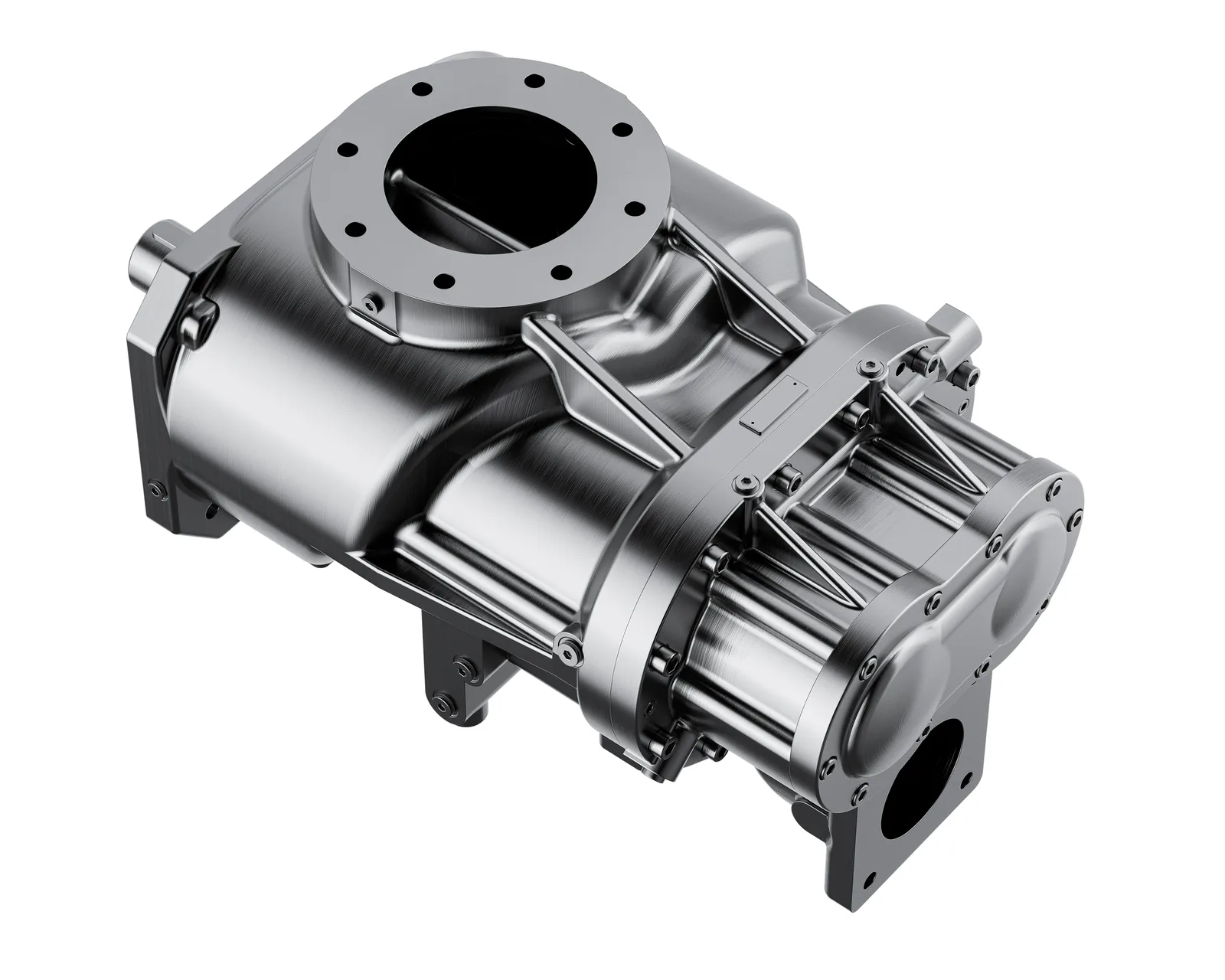
The overhaul nobody budgets for
Bearing and airend service at 40,000–60,000 running hours is a real line item that many ten-year comparisons quietly omit. On a machine running 6,000 hours a year, that overhaul lands inside your comparison window. If one quote includes a service contract covering it and the other does not, the comparison has a hole in it the size of the overhaul.
This is the kind of cost that separates a service partner from a box supplier. Ask three questions: what does the extended warranty cover, what is the parts lead time for the airend, and is there local stock of the consumables. A supplier who cannot answer the second question has told you something important about the fourth cost bucket.
The costs buyers forget
These do not appear in any quote, and between them they routinely exceed the price difference between competing machines.
Leakage
An untreated compressed air distribution system leaks. A plant that has never run a leak survey is often losing a double-digit percentage of generated air. The loss is invisible on the pressure gauge because the compressor simply works harder to hold the setpoint, so it shows up only as energy. Fixing leaks is cheap and the payback is measured in months.
Over-drying
Specifying a dryer class well above what the application needs is a permanent energy penalty paid for a quality standard nobody requires. The right question is what dew point the process actually needs, asked process by process, not “what is the best dryer”.
Condensate handling
The water that comes out of a compressor contains oil. In most jurisdictions it cannot go down the drain untreated. Separators, drains and disposal are a cost line and a compliance obligation, and they are usually discovered after installation.
Heat that is thrown away
Roughly 80–90% of the electrical energy into a compressor leaves as heat. Most of it goes out of the room through the cooler. Recovering it for space heating, process water or boiler make-up is a genuine offset, and in cold climates with a heat demand it can shorten the payback of the whole project. Where there is no heat demand, recovering it is pointless — but that judgement belongs in the calculation, not in the bin. Details in the waste heat recovery breakdown.
Oversizing
The most common and the most expensive mistake. Oversizing looks conservative and is not: it pushes the machine into a load band where its specific power is worse, adds cycling losses, and raises the capital cost for capacity that is never used. Right-sizing starts from measured demand, which is why the selection-by-demand walkthrough starts with measurement rather than with machine types.
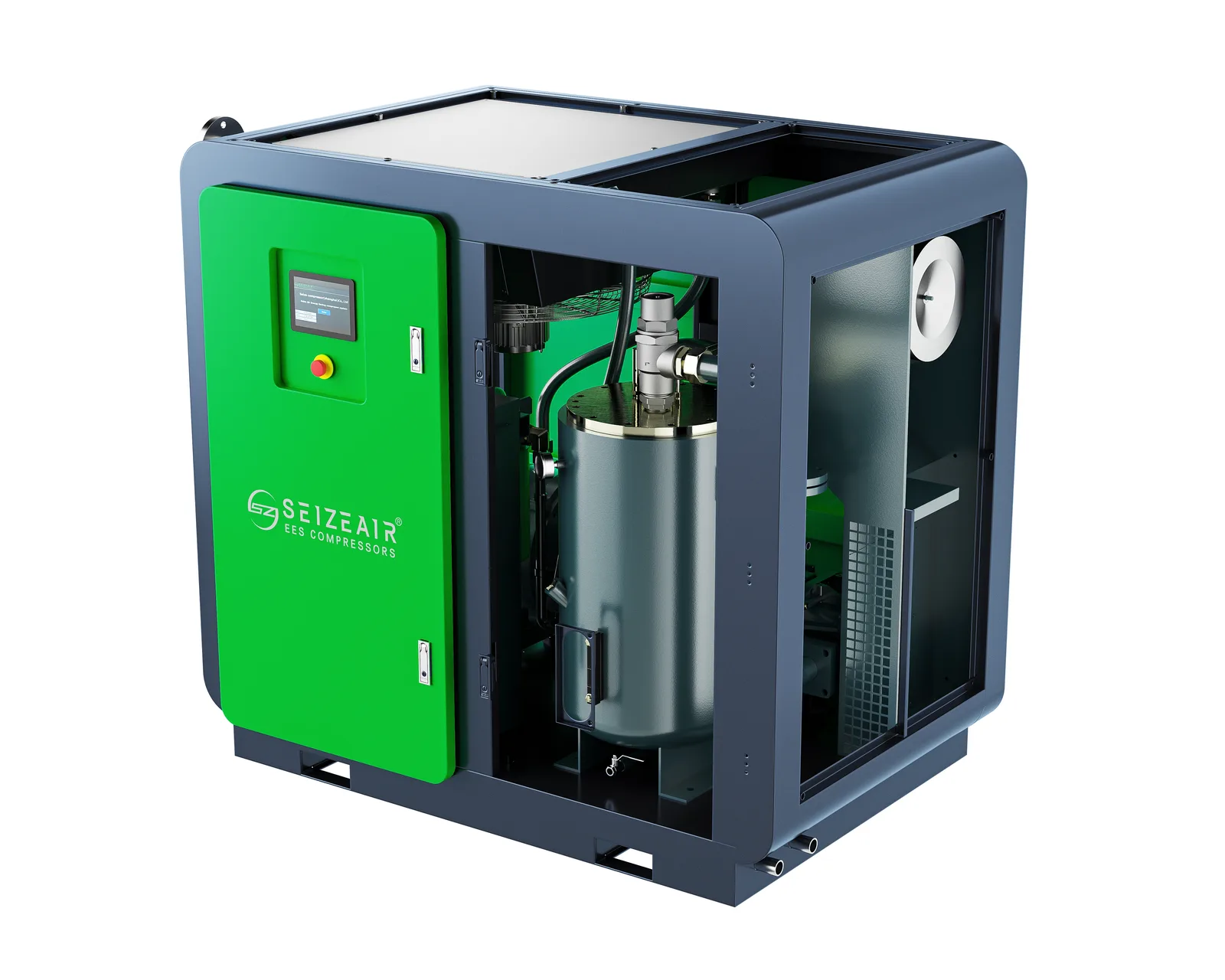
Worked example: two machines, ten years
The numbers below are invented, and deliberately so — a worked example with stated assumptions is more useful than a real case you cannot audit. Substitute your own inputs and the structure still holds.
Assumptions: 6,000 running hours per year, 60% average load factor, electricity at 0.10 per kWh, ten-year horizon, air demand identical for both machines.
| Line item | Machine A | Machine B |
|---|---|---|
| Purchase price, installed | 40,000 | 48,000 |
| Specific power at 60% load (kW per 100 cfm) | 22.5 | 19.8 |
| Annual energy (kWh) | 297,000 | 261,400 |
| Annual energy cost | 29,700 | 26,140 |
| Planned maintenance per year | 2,400 | 2,100 |
| Ten-year energy | 297,000 | 261,400 |
| Ten-year maintenance | 24,000 | 21,000 |
| Airend overhaul at hour 48,000 | 12,000 | included in service contract |
| Ten-year total | 373,000 | 330,400 |
Machine B costs 8,000 more to buy and 42,600 less to own. The price premium is recovered in a little under three years on energy alone, before the overhaul difference.
Now change one input: drop running hours to 1,800 a year at 40% load. Energy becomes a much smaller term, the eight-year payback stretches past the horizon, and Machine A wins. Same machines, opposite answer. That is the whole argument for doing the arithmetic instead of arguing from price.
How to read a quote: five numbers to ask for
You can convert almost any compressor quote into a comparable form by requesting the same five figures from every bidder. Suppliers who can supply them are telling you they expect to be compared on them.
- Free air delivery (FAD) at a stated pressure, measured to a recognised standard — not “theoretical displacement”. Displacement and delivered air are different numbers.
- Specific power at full load, at 70% load and at 40% load. Three points, not one. If a supplier only publishes full load, ask why.
- Unloaded power draw and the idle shutdown delay. These decide what happens when demand collapses at break time.
- The full ten-year service schedule with consumable prices and labour hours. Not a brochure interval — a priced schedule.
- Warranty terms in writing, including what voids them and what the response time is.
If two quotes cannot be put in this form, you are not comparing machines, you are comparing sales documents.
When the cheaper machine is the right answer
An honest air compressor total cost of ownership analysis sometimes confirms the low bid, and you should know in advance when that is likely.
- Low annual hours. Under roughly 2,000 hours a year, energy stops dominating and the efficiency premium takes too long to recover.
- Intermittent, lumpy demand. A machine that runs hard for twenty minutes and rests for an hour behaves differently from one on steady duty, and the part-load advantage narrows.
- Standby or redundant service. A backup unit that runs 200 hours a year is insurance, not an energy asset. Buy the reliable cheap one.
- Cheap electricity with no escalation. The energy term shrinks and capital regains weight.
- Short expected horizon. If the site lease runs five years, do the calculation over five years.
Watch for the reverse trap too: buying the high-efficiency machine and then running it in a load band where it never reaches that efficiency. Variable speed drives are genuinely excellent in the right duty profile and thoroughly unremarkable in the wrong one. The machine does not fix a bad sizing decision.
Replacement timing: when to stop maintaining the old one
There is a point where an older compressor is worth more as scrap and floor space than as an asset. Signals that you are near it:
- Measured specific power has drifted well above its original figure, and a full service does not bring it back.
- Unplanned repairs are becoming an annual event rather than an occasional one.
- Spare parts for the model are on extended lead time or have gone obsolete.
- The machine cannot hold pressure without running at the top of its band, and demand has grown past its capacity.
- It needs a refrigerant or oil type that is being phased out.
The decision is not “is it still running” — it is whether the next three years of energy and repair cost exceed the annualised cost of a replacement. Plants that run this comparison often find the crossover earlier than expected, which is why older machines are so often replaced for financial reasons while still mechanically functional. If oil-free air is part of the requirement, the comparison shifts again: the case for replacing outdated units with two-stage oil-free machines walks through that version.
Building your own TCO sheet in six steps
- Measure demand first. Flow and pressure over a representative production week. Without this every downstream number is a guess, and the guess is usually too high.
- Fix the air quality class. What does each application actually require? Write it down. This decides the dryer and filtration cost before you look at compressors. Where Class 0 is specified, the certification question is separate from the machine question.
- Get three quotes on identical scope. Same FAD, same pressure, same air treatment, same installation scope, same service period.
- Ask for the five numbers listed above and enter them in the same columns for every bidder.
- Run the ten-year model with your tariff, your hours and your load factor. Then run it again with the load factor 15 points lower and see whether the ranking holds.
- Add the risk line. Cost of a one-day stoppage × probability × ten years. Crude is fine. Omitting it entirely is not.
The output is not a single right answer. It is a defensible one — and when finance asks why you did not take the low bid, you will have a spreadsheet instead of an opinion.
Financing, leasing and how they change the calculation
How you pay for the machine does not change what it costs to run, but it changes which number the business optimises — and that matters when the capital budget and the operating budget sit in different places.
If the machine is leased or financed, the capital term becomes a stream of payments and the comparison should include the cost of funds. The energy term is unaffected, which is the useful part: a high-efficiency machine with a higher financed capital cost can still produce a lower monthly total, because the energy saving shows up in the operating budget from month one. This is often the argument that gets an efficient machine approved in a plant where capital is rationed but operating spend is not.
Two cautions. First, do not let a financing structure hide the horizon — compare over the same ten years regardless of payment schedule. Second, check what happens at end of term: some structures leave you with a residual payment that belongs in the capital line, and some leave you with a machine you do not own.
Tax treatment can also move the answer. Capital allowances, energy-efficiency incentives and accelerated depreciation vary by jurisdiction and change from year to year, so treat them as a separate line you can switch off rather than as part of the core calculation. If the ranking of two quotes depends entirely on a tax incentive, the incentive is the decision — and that is a different kind of risk.
Multi-site fleets: the TCO that gets written down last
Companies running compressors across several plants have a cost line that never appears in a single-machine comparison: fleet complexity. Three machine brands across four sites means three sets of consumables, three service contracts, three spare-parts inventories, and maintenance staff who cannot move between sites without retraining.
Standardising does not make any individual machine more efficient. It reduces the maintenance and risk terms across the fleet, and it improves the negotiating position on both service and spares. Those savings are real but diffuse, which is exactly why they are usually omitted from procurement decisions made site by site.
If you buy for a fleet, run the single-machine air compressor total cost of ownership calculation first, then add a fleet line for inventory, training and contract overhead. It rarely flips the choice between two machines on one site — but it often decides the framework agreement, which is worth more over ten years than any single machine decision.
Common mistakes in an air compressor total cost of ownership comparison
- Comparing full-load efficiency only. Your plant is not at full load. If only one number is available, the comparison is incomplete.
- Using nameplate kW instead of input kW. Motor nameplate and shaft power are not the same as power drawn at the meter.
- Ignoring the pressure band. Two machines quoted at 7.5 bar and 8.5 bar are not delivering the same service.
- Forgetting that energy price moves. A ten-year model at a fixed tariff understates the efficient option, because the tariff is the least likely input to stay flat.
- Leaving the overhaul out because it happens in year eight. Year eight is inside the window.
- Treating the calculation as a way to justify a decision already made. If the sheet always produces the answer you wanted, check the inputs.
Frequently asked questions
How much of a compressor’s ten-year cost is electricity?
Most industrial audits put energy in the region of 70–80% of ten-year cost, with capital around 10–15% and maintenance 5–10%. The split is highly sensitive to your tariff and your running hours; at low hours and cheap power the capital share rises substantially.
Is a variable speed drive always worth the premium?
No. VSD earns its premium where load varies steadily and the machine spends meaningful time at partial load. On a flat, near-constant load close to full capacity, a well-matched fixed-speed machine can be the better financial choice. The load profile decides it.
Should I include downtime in a TCO calculation?
Yes, even as a rough range. Excluding it biases the result toward machines with no redundancy and weak local support. An imperfect estimate beats a silent zero.
Does oil-free change the cost picture?
It changes the shape. Oil and separator consumables largely disappear; the air-end service interval and the capital premium become the dominant differences. Whether that is cheaper over ten years depends on whether the application genuinely requires oil-free air — if it does, the comparison is not optional.
How long should the comparison horizon be?
Long enough to include at least one major service event. Ten years is the conventional choice for industrial duty; if your site horizon is shorter, use that instead and say so.
Does air treatment belong inside the compressor TCO?
Yes, if the application needs treated air. A dryer and filters are part of delivering the specified quality, and they carry their own energy and maintenance cost — desiccant dryers in particular can consume a meaningful share of purge air. Comparing compressors while leaving treatment outside the boundary flatters whichever option needs the more expensive treatment to meet the same class.
What if I cannot get load data?
Estimate, then test the sensitivity. If the ranking of quotes survives a 15-point swing in load factor, the estimate was good enough. If it flips, spend the money on a week of logging before signing.
What to do next
Put your demand measurement, your power tariff and your air quality requirement into a single sheet before you request another quote. The conversation with suppliers changes character once they know you will be comparing specific power at part load and asking for a priced ten-year service schedule.
If you want a second pair of eyes on a comparison you are running now, our application engineers do that as a matter of course — send the duty profile and the air quality class, and we will model it with your inputs rather than ours. The screw versus reciprocating comparison is a useful companion read if the machine type is still an open question, and the ISO 8573-1 Class 0 certification note covers the quality side of the specification.