



 English
 Russia
 France
 Spain
 Arab

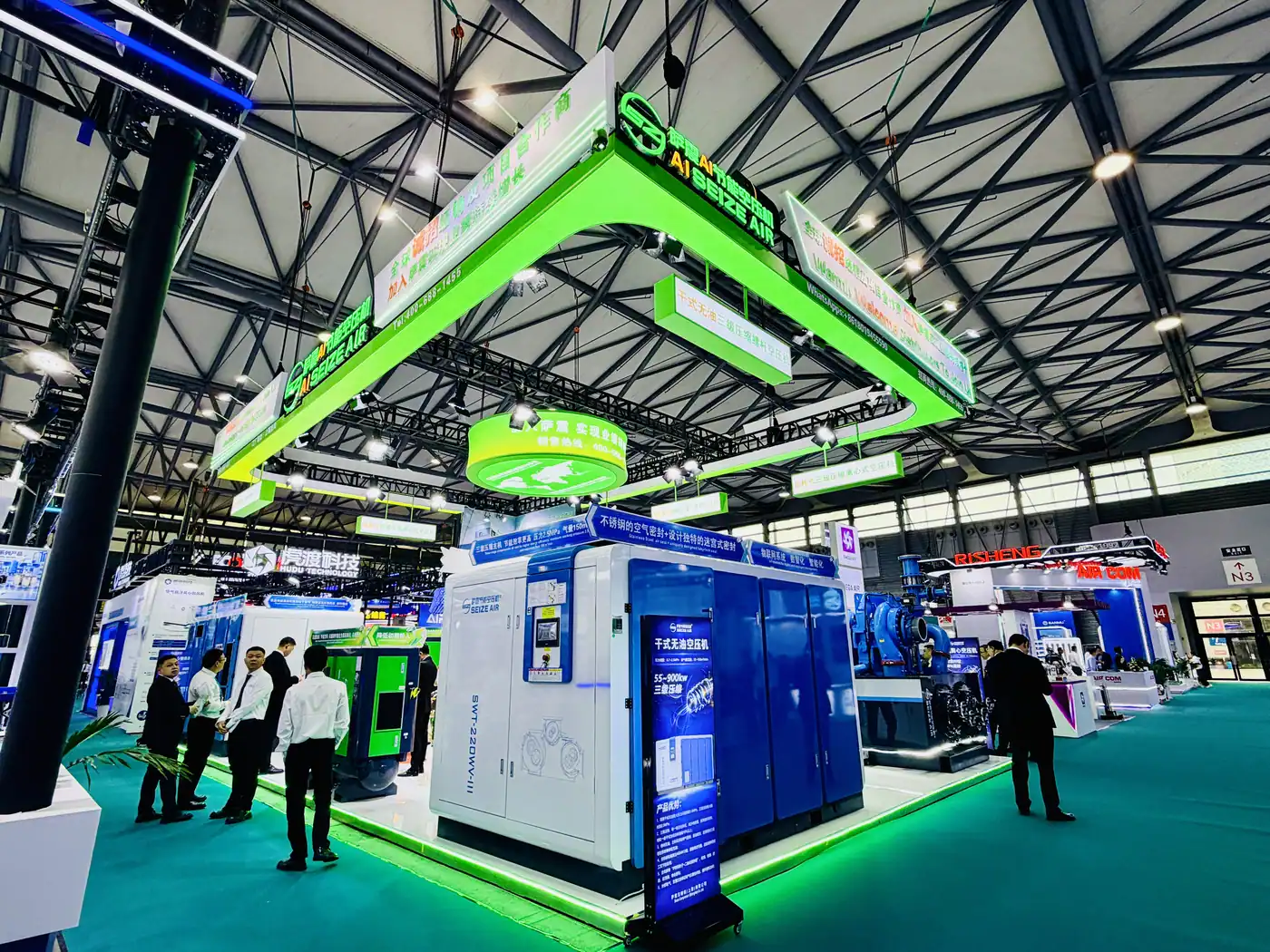
The 2026 edition of PTC ASIA closed in Shanghai after four days at the Shanghai New International Expo Centre, and the Seize Air team has spent the days since unpacking what happened at our stand in Hall N4, Booth D3. This PTC ASIA 2026 review is written for two audiences at once: the buyers and distributors who visited us and want a summary they can share internally, and the plant engineers who could not make it to Shanghai this year and want to know whether the show was worth planning for next time.
Trade show recaps often collapse into a list of products and a thank-you paragraph. That is not very useful. What follows instead is a review in three layers: what we brought to the stand and why, what visitors actually asked about once they were standing in front of the machines, and what those conversations reveal about where the compressor market is heading — with a practical closing section for anyone evaluating a compressor purchase or a distribution partnership this quarter.
What we exhibited, and why those machines
A stand at PTC ASIA is a statement about what a manufacturer believes the market wants next. We built ours around four product groups, each answering a different question that industrial buyers are asking in 2026.
The magnetic-bearing oil-free centrifugal compressor
The centrepiece of the stand was our oil-free centrifugal unit built on active magnetic bearing technology. The banner over the machine carried the honest technical headline: five degrees of freedom of active magnetic bearing control, with the rotating assembly levitating inside the housing — no oil, no conventional bearings in the flow path, and no friction losses during operation.
Why lead with this machine? Because the gap between “oil-free rated” and “genuinely oil-free in the air stream” is where a lot of purchasing confusion lives. A magnetic-bearing centrifugal compressor removes the question structurally: with no oil system in the compression path and no contacting rotating parts, the lubrication problem does not exist to be managed. For plants in food, pharmaceuticals, electronics and fine chemicals, that structural answer is often the whole conversation.
Visitors who came specifically to see this machine tended to be the most technical of the week — engineers who had read about magnetic bearings and wanted to put a hand on the enclosure, ask about turndown behaviour, surge margins and control integration. Those conversations are exactly what a stand is for, and the machine drew them steadily across all four days.
The oil-free screw range
Alongside the centrifugal unit we showed the oil-free screw range, including the two-stage oil-free machines that anchor most mid-range oil-free installations. This is the workhorse tier of oil-free air: applications that need certified air purity class without the flow volumes that justify a centrifugal train. The certification background matters here — Seize Air’s oil-free and water-injected screw compressors hold ISO 8573-1 Class 0 certification, which we covered in detail when the Class 0 certification was awarded, and it remains a frequent topic with quality-driven buyers.
Permanent-magnet two-stage screw compressors
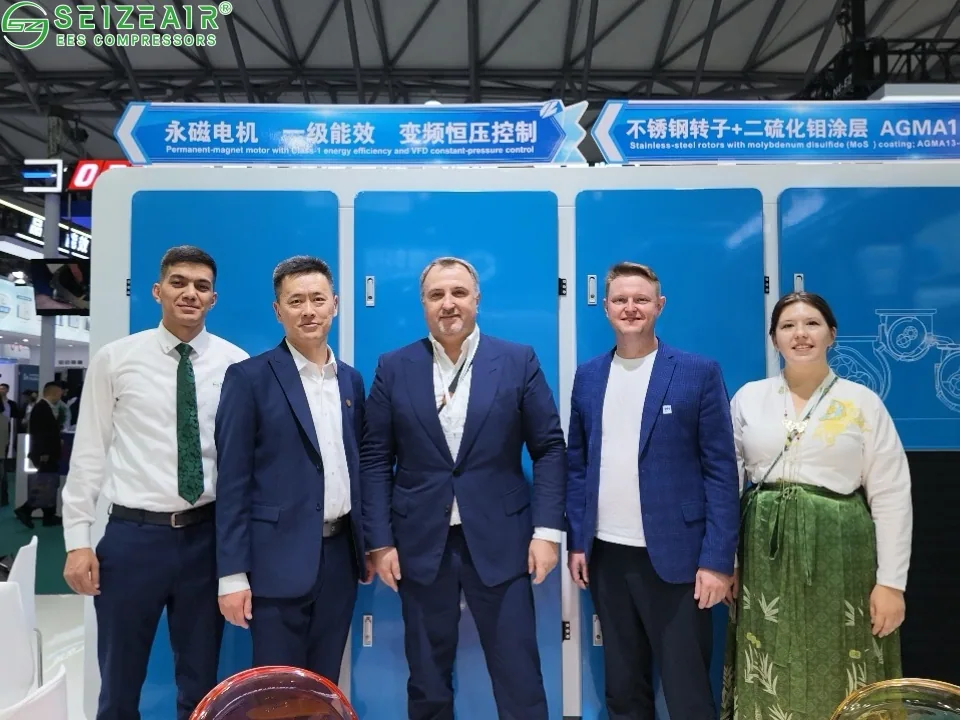
The third group answered the question that dominates most factory visits: energy cost. Our permanent-magnet variable-frequency two-stage screw compressors were on display with the two features that define their efficiency story — a PM motor at the top efficiency class with variable-frequency, constant-pressure control, and a two-stage compression element with stainless-steel rotors carrying a molybdenum disulfide coating, built to AGMA precision standards.
The stainless-rotor detail draws more questions than any brochure ever has. Rotor corrosion and coating wear are what actually kill efficiency in real installations — the compression element that leaves the factory at its rated specific power rarely stays there if the rotors rust or the coating degrades. Specifying stainless rotors with a MoS2 coating from the start is a design decision about year-eight performance, not year-one performance, and buyers who have owned machines for a decade understand that immediately.
Integrated all-in-one units
The fourth group was the compact end of the range: integrated units that package the screw compressor, storage and air treatment into a single enclosure. The demo unit on the stand showed the layout clearly — high integration, small footprint, key components pre-assembled at the factory. These units answer a constraint we hear constantly from buyers in Southeast Asia, the Middle East and Latin America: floor space is expensive, installation windows are short, and a machine that arrives as one bolt-together package with the treatment train already matched to the element beats a component list that someone has to integrate on site.
What visitors actually asked about
Product displays set the stage, but the value of a trade show is in the questions. Four themes came up again and again across the four days, from very different visitor profiles.
1. “What will this machine cost me per year, not per unit?”
The single most common conversation thread was total cost of ownership. Buyers arrived knowing purchase prices from quotes and websites; what they wanted at the stand was the second-order conversation — specific power at part load, what happens to consumption when demand drops, service intervals, and how a two-stage element holds its efficiency over years. This matches what we write about in our guide to what an industrial air compressor actually costs, but at the stand the discussion moved from general principles to specific configurations in minutes. That speed is exactly the argument for meeting at a show rather than over a fourth round of email.
2. Air purity classes and what certification actually proves
Oil-free enquiries came not only from food and pharma but from electronics, textiles and general manufacturing plants that are being pushed by their own customers to document air quality. The recurring question was not “is it oil-free” but “what does the certificate guarantee and who verified it” — a sharper question than in previous years, and the right one. ISO 8573-1 classes, verified by an independent body, answer it; the filter grades guide breaks down which elements carry which class so buyers can match the train to the requirement instead of over-buying treatment.
3. Variable speed in real duty cycles
Visitors with unstable demand — sawtooth profiles, shift patterns, seasonal products — wanted specifics on variable-frequency control: how constant-pressure control behaves at low load, where the efficiency crossover against a fixed-speed machine sits, and what happens at night and weekend consumption levels. The practical answer is always the same starting point: measure the load profile first, then size. Buyers who arrived with consumption data left with a preliminary configuration; buyers who arrived without it left with a method.
4. Service, parts and partnership
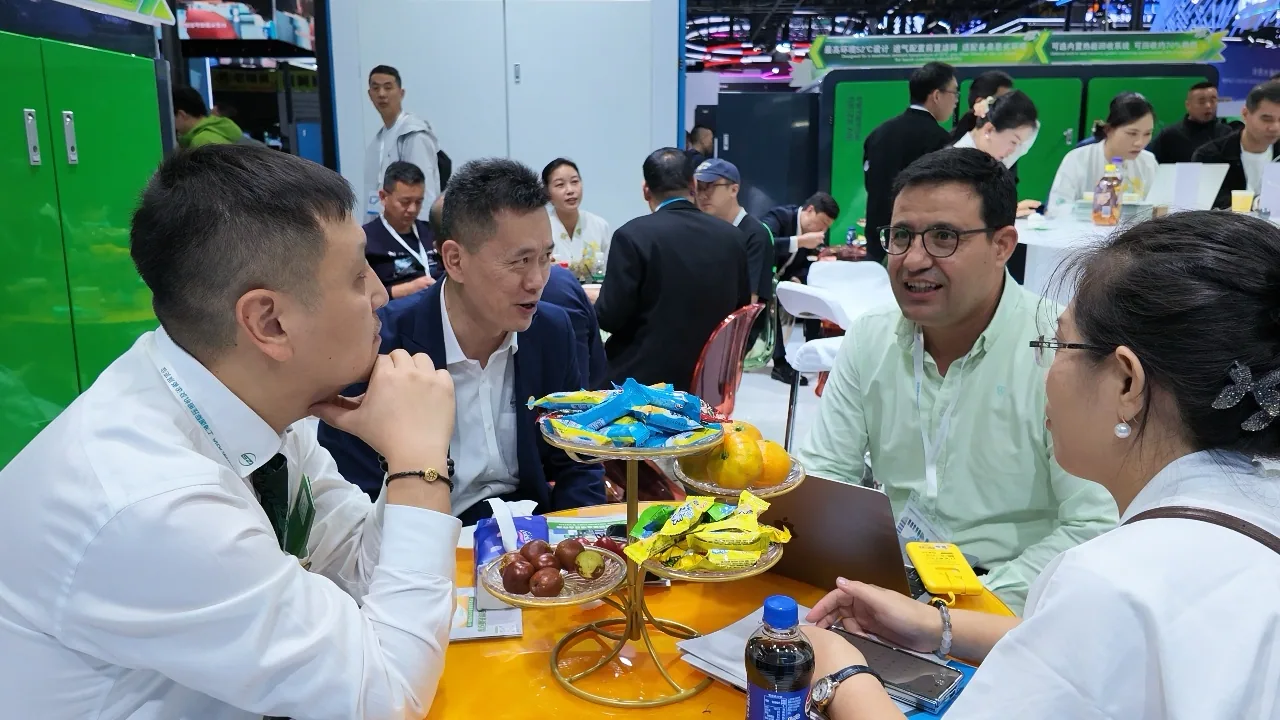
Distributors and service companies — a large share of the professional visitors at PTC ASIA — asked a different set of questions: delivery times, spare-part availability, training and the terms of regional distribution. Several delegations from Asian and CIS markets used the show for exactly this purpose, meeting the team, seeing the range in one place, and qualifying the factory behind the catalogue. For this audience the show is not a product display; it is a supplier audit conducted in person.
What the traffic pattern said about the market
Read any four days of stand conversations together and patterns emerge. Three stood out this year.
Energy is the entry question, air quality is the follow-up. Five years ago the typical first question was price; this year it was consumption — often quoted as electricity cost per unit of production rather than kilowatts. But the follow-up questions consistently turned to air quality classes and treatment. Buyers have internalised that energy efficiency and air purity are not separate purchases; they are one system, and they increasingly evaluate them as one.
Oil-free interest is broadening beyond its traditional base. The visitors engaging with the magnetic-bearing and oil-free screw units included a noticeable share of general manufacturing plants with no regulatory obligation for oil-free air — plants that are choosing oil-free to eliminate condensate treatment entirely, protect downstream processes, or simplify compliance paperwork. That is a structural shift in the buyer base for oil-free technology, and it was visible in who stood at which machine.
Buyers arrive better prepared than ever. A large fraction of serious enquiries came with real numbers attached: measured consumption, pressure requirements, air quality targets, even competitor quotes. Visitors have clearly done their homework online before travelling to Shanghai. The role of the stand is therefore shifting from introduction to verification — buyers come to check that the machine behind the specification is real, and to put a face to the factory. Manufacturers who treat a stand as a brochure in 3D are missing what the audience is actually there for.
What drew a crowd at the stand
Stands have gravity. Certain exhibits pull people in from the aisle, and watching which ones is itself market research. At Booth D3 the gravity map was consistent across all four days.
The magnetic-bearing centrifugal unit worked as the technical anchor. Even visitors with no centrifugal application slowed down at it, because the proposition is legible without any explanation: a machine whose rotating assembly never touches anything. Once drawn in, the conversation reliably moved from curiosity to specifics — how the bearings behave through a power event, what maintenance the absence of oil actually removes from the schedule, and what flow range makes the technology economic. Engineers who arrived sceptical tended to leave with a different question: not whether magnetic bearings work, but at what plant size they make sense.
The green integrated unit drew a different crowd: practical buyers measuring with their eyes. The appeal was the footprint and the visible factory-fit of the treatment train — a package that answers the “who assembles what, and who is responsible when it does not match” question before it is asked. Several visitors photographed the nameplate layout and the piping arrangement, which told us exactly what they were taking home to compare.
The third point of gravity was less a machine than a format. Our industry exchange sessions at the stand — short, structured conversations rather than a sales pitch — filled seats around the meeting tables, and the quality of the questions there was higher than on the floor, because people had already decided the topic was worth thirty minutes. A trade stand that gives visitors a reason to sit down collects a fundamentally different conversation than one that only lets them walk past.
Why oil-free technology keeps moving into general industry
One shift deserves its own section, because it showed up in the visitor profile as clearly as in the enquiry list: oil-free air is no longer a niche specification reserved for regulated industries.
The classic oil-free buyers — food and beverage, pharmaceuticals, electronics — were present as always, asking the questions their quality systems require. But a steady stream of visitors came from textile mills, general machining, packaging, automotive supply and building materials, industries with no regulator forcing the issue. Their reasons were commercial, and they were consistent: eliminating oil condensate removes the water-treatment and disposal obligations that increasingly complicate permits; it removes a contamination risk that some of their own customers now audit; and it simplifies the air quality story they have to defend internally.
The economics behind this shift are straightforward. Oil-free machines carry a purchase premium, and the premium narrows every year as volumes grow. Meanwhile the hidden costs of oil-injected air — oil filters, condensate treatment, downstream coalescers working harder, the occasional batch spoiled by an oil carry-over event — have quietly risen with environmental enforcement. When a general-industry buyer runs that comparison honestly, oil-free increasingly wins at flow ranges where it never used to be quoted. The buyers at the stand who were doing this arithmetic were not pioneers; they were accountants.
For buyers considering the move, the entry point is the same as for any air quality decision: name the class, then build the train backwards from it. A verified Class 0 machine at the source does not remove the need to think about dryers and filtration — particulates and moisture are separate axes of the ISO 8573-1 standard — but it collapses the oil axis of the problem to zero and shrinks the treatment train accordingly. That simplification, as much as the purity itself, is what the new oil-free buyers said they were buying.
Three configurations that sparked the longest debates
Some stand conversations ended in five minutes; others ran half an hour and drew an audience. The three configuration debates below recurred often enough to be worth writing down, because each one maps to a decision many plants are facing regardless of whether they visited Shanghai. The applications described are composites of real enquiries, with identifying details removed and no figures quoted — the numbers belong to the buyers, not to a blog post.
A three-shift textile plant weighing variable speed against a bigger fixed-speed machine
The debate: replace an ageing fixed-speed screw machine with another fixed-speed unit of the next size up, or move to a permanent-magnet variable-frequency two-stage machine at a similar rating. The buyer’s instinct was to size for the peak and keep the technology familiar. The counter-argument, made concrete at the stand, was the shape of his own load profile: a three-shift weaving operation with batch changes does not draw a flat line, and every hour spent unloading a fixed-speed machine is purchased electricity producing nothing. The resolution — as always — was to log the consumption for a week and let the profile decide. The interesting part was not the answer; it was that the buyer had never seen his own demand curve. He left with a logging method, which is a better outcome than a quote.
An electronics plant deciding whether magnetic-bearing centrifugal is worth the step up
The debate: a large electronics campus with stable, growing flow was comparing a train of oil-free screw machines against a magnetic-bearing centrifugal unit. The honest engineering answer is that both can deliver certified oil-free air, and the decision lives in the load profile and the growth plan. Screw machines scale in steps and stack in parallel; a centrifugal covers large stable flows with fewer enclosures and exceptional part-load efficiency from the magnetic-bearing drive train, but wants a flow base to sit on. The stand conversation moved the decision from “which technology is better” — an unanswerable question — to “what does our expansion curve look like over five years”, which is answerable and decides the choice on its own.
A workshop that wanted air tomorrow, not next quarter
The debate: a fabrication workshop with a short relocation window was weighing a component system — compressor, tank, dryer, filters sourced and piped separately — against an integrated all-in-one unit. The component route can squeeze out margin and suits buyers with an experienced installer and time. The integrated route trades some configurability for a factory-matched package that bolts in and starts. What settled the debate was not efficiency but accountability: one supplier responsible for the matched whole, versus an integrator responsible for getting four products to agree. For a workshop with no compressor specialist on staff, the package won — not because integrated machines are inherently superior, but because the failure mode of a mismatched component system is discovered after the invoice is paid.
The pattern across all three debates is worth naming: the machines were rarely the hard part. The hard part was getting the buyer’s own operating data into the conversation. That has been true at every show, and it is the reason our follow-up process starts with the demand profile rather than the price list.
How to work a compressor show: a buyer’s method
Watching four days of visitors move through the stand also taught — or re-taught — a lesson in how to attend a show well. The buyers who left Booth D3 with something useful ran a recognisable method, and it costs nothing to copy:
Arrive with three numbers. Peak consumption, average consumption, and working pressure. Everything else at a compressor stand — the sizing check, the part-load comparison, the treatment recommendation — unlocks from those three numbers. Visitors who had them got engineering answers in minutes; visitors who did not got brochures. If measuring demand is not yet a habit, the selection guide above explains the method, and it works before a show just as well as at one.
Ask the second question. The first question at any stand gets the rehearsed answer: what flow, what pressure, what price band. The second question — “what happens to the specific power at 40% load”, “what does the warranty cover in year four”, “which parts wear and what do they cost” — is where suppliers sort themselves. A manufacturer comfortable with its product answers the second question with documents. At this show, the visitors who asked second questions were the ones collecting real comparison data.
Photograph the details, not the facade. The most experienced visitors at Booth D3 photographed nameplates, piping arrangements, control screens and enclosure layouts — the details that survive into a specification — rather than the stand’s big visuals. Facade photos do not help you buy a machine; nameplate photos start negotiations.
Book the deep conversation, don’t queue for it. The most valuable exchanges of the week happened at the meeting tables, thirty minutes at a time, with people who had written to us before the show. Walking up and hoping for an engineer between two demos works, but a scheduled slot converts the same four days into several times the technical depth. The same is true of every serious exhibitor at the fair; the shows publish exhibitor contacts for exactly this reason.
Treat the show as the start of procurement, not the end. No purchase decision should be made at a stand, and the buyers who knew that used the show to build the comparison set — configurations, contacts, questions to send — and then ran the serious evaluation at home against real quotations. The stands are for narrowing; the office is for deciding.
If you visited: turning a stand conversation into a project
For buyers who spoke with us at Booth D3, the conversation does not end when the crates are packed. The follow-up that produces results is concrete, and it works best in this order:
1. Send your demand profile. Peak and average consumption, working pressure, duty pattern, and any planned expansion. With that data, the preliminary configuration discussed at the stand becomes a sizing check against real numbers — the same measurement-first method described in our compressor selection guide.
2. Confirm your air quality requirement as a class, not a feeling. “Clean air” is not a specification. A named ISO 8573-1 class per contaminant turns the treatment train into a design exercise with a defined answer.
3. Ask for the specific power, not just the power. Two machines with the same motor rating can differ meaningfully in specific power at your actual operating point. If a stand conversation promised a configuration, the written offer should show specific power at your pressure and load profile.
4. Plan the room before the machine. Ventilation, pipe sizing, receiver volume and treatment placement decide whether the machine performs on your floor the way it did on the stand. Buyers routinely under-plan distribution; our guide to pressure drop causes and fixes covers the network side that nobody photographs but everybody feels.
If you missed the show: what is worth knowing anyway
Not everyone who needed the content could be in Shanghai. For the rest, the short version of what PTC ASIA 2026 demonstrated:
The technology direction of the industry is visible in one walk down the compressor halls: electrification of control (variable speed as the default answer to unstable demand), structural elimination of oil in the compression path (magnetic bearings, water injection, dry elements), and integration (factory-matched packages replacing component assembly on site). None of these are new ideas in 2026 — what changed is that they have moved from premium catalogue pages to the volume market, with Chinese manufacturers carrying much of that shift, which is precisely why the halls were full of international buyers doing supplier audits in person.
For buyers planning a purchase in the next two quarters, the practical takeaway is not “buy what was on the stand” — it is “specify the way the market has moved”. Ask for specific power at part load. Demand verified air quality classes. Compare total cost over ten years, not the invoice. And if the supplier cannot answer those questions with documents, that itself is an answer.
What happens next on our side
The stand comes down; the follow-up starts. One more note for the visitors who asked: the machines shown at Booth D3 are not show specials — they are catalogue configurations with published specifications, and the quotations issued after the show carry the same terms as before it. Concretely, the next weeks hold three things: technical follow-up on the sizing questions raised at the stand, continued conversations with the distribution partners who visited Shanghai, and — the part that matters to a global audience — the show content converted into published technical guides, of which this review is one. Readers of this site will keep seeing the themes that drew crowds at Booth D3 turning into practical articles: air quality classes, part-load efficiency, pipe networks and total cost.
If you are evaluating a compressor purchase, planning a station upgrade or looking at a distribution partnership, you do not need to wait for the next edition of the show to continue the conversation. The pages below cover the topics visitors asked about most, and the team is one message away.
Frequently asked questions
When and where was PTC ASIA 2026 held? The show ran from 3 to 6 November 2026 at the Shanghai New International Expo Centre (SNIEC) in Shanghai, China. Seize Air exhibited in Hall N4, Booth D3, as announced in our pre-show invitation.
Which Seize Air products were displayed at PTC ASIA 2026? The stand featured four groups: the magnetic-bearing oil-free centrifugal compressor and oil-free screw range, the permanent-magnet variable-frequency two-stage screw compressors with stainless-steel rotors and MoS2 coating, and integrated all-in-one units packaging compressor, storage and treatment.
Is the magnetic-bearing centrifugal compressor suitable for small plants? Magnetic-bearing centrifugal technology is aimed at plants with larger, stable flows where its part-load efficiency and oil-free air stream justify the technology. Smaller plants with unstable demand are usually better served by variable-frequency screw machines — the right answer depends on the measured load profile, which is why we start sizing conversations there.
Will Seize Air exhibit at PTC ASIA 2027? Show participation is confirmed season by season. The reliable way to get the next invitation with dates and booth number is to contact the team or follow the site; announcements go out well before each edition.
Can the machines shown at the stand be quoted for overseas delivery? Yes — every configuration discussed at the stand exists as a quotable model, and overseas enquiries are handled exactly like the pre-show enquiries: demand data in, sizing check and quotation out. The stand added faces and running machines to that process; it did not change it.
What was the most common mistake in the enquiries you heard? Sizing from nameplate arithmetic instead of measured demand, and specifying air quality as “clean” instead of as an ISO 8573-1 class. Both mistakes are fixable in one round of correct questions, which is what the guides on this site exist for.
PTC ASIA 2026 confirmed what the stand conversations told us all four days: buyers are buying outcomes — verified air quality, measured energy cost, a supplier who answers with documents — and the machines that win the next decade are the ones specified and built around those outcomes. See you in Shanghai next time, and until then, the guides below are open twenty-four hours a day.